

Table of Contents
Have you ever come across the name lake texoma written with lowercase letters and wondered if it’s correct? If so, you’re not alone. Whether you’re writing a school paper, travel blog, or even planning a trip with friends, it’s important to know that Lake Texoma should be capitalized. Why? Because it’s a proper noun, and proper nouns always begin with capital letters. But this topic isn’t just about grammar. It’s about understanding geography, local pride, writing rules, and why names matter.
In this article, we’re going to explore everything you need to know about why Lake Texoma should be capitalized. We’ll talk about what Lake Texoma is, where it’s located, what makes it special, and how to correctly use its name in writing. Plus, we’ll touch on some fun facts about the lake and answer common questions that people ask. You’ll leave with more than just grammar tips—you’ll also learn a few cool things that make Lake Texoma one of the most popular lakes in the United States. Get ready to dive in!
What Is Lake Texoma?
Lake Texoma is a large, beautiful lake located on the border between Texas and Oklahoma (which is where the name “Texoma” comes from—Texas + Oklahoma). It’s one of the biggest lakes in the United States and was created by the Denison Dam in 1944. People love visiting Lake Texoma for all kinds of reasons like fishing, boating, swimming, and camping. With more than 89,000 acres of water and over 1,200 miles of shoreline, it’s a great spot for family vacations and outdoor fun. When writing this name, remember that Lake Texoma should be capitalized because it’s the official title of a specific place.
Why Lake Texoma Should Be Capitalized
Let’s be clear—Lake Texoma should be capitalized because it’s a proper name. In English grammar, proper nouns refer to specific people, places, or things, and they always begin with capital letters. It’s similar to how we capitalize names like New York City, Mount Everest, or Lake Michigan. Writing “lake texoma” without capitals makes it look like just any ordinary lake, which it’s not! Using capital letters shows respect for the real location and helps readers understand that you’re talking about a unique, well-known spot on the map.
Understanding Proper Nouns and Place Names
Let’s take a quick grammar trip. A proper noun tells you the exact name of something: like Eiffel Tower, Atlantic Ocean, or Grand Canyon. All these names must be capitalized. In the case of Lake Texoma, the word “Lake” is part of the official title, not just a description. So, both “Lake” and “Texoma” need capital letters. If we said “a lake near Texas,” that’s general. But when we say “Lake Texoma,” it points to one very specific lake. That’s the difference, and that’s why Lake Texoma should be capitalized in every form of writing—formal or casual.
The Meaning Behind Texoma
So, what does Texoma mean, anyway? It’s a mix of Texas and Oklahoma, the two states the lake touches. This blended name is special because it connects both states in one friendly term. Over time, “Texoma” has become a whole region—some people even call it the Texoma Area. This place has its own hotels, communities, and parks. Names like this show local pride, and capitalizing “Texoma” honors the unique identity that the area brings. That’s one more reason why Lake Texoma should be capitalized—it’s not just a lake. It’s a meaningful spot with history and heart.
Common Mistakes in Capitalizing Lake Names
Many people make innocent mistakes when typing names of lakes. They might write lake texoma or lake michigan, thinking the word “lake” isn’t important. But when it’s part of the official name, like with Lake Texoma, it must be capitalized. Compare these examples:
- ❌ I visited lake texoma last summer.
- ✅ I visited Lake Texoma last summer.
See the difference? Skipping capital letters can make writing look sloppy or unclear. If you want your writing to sound correct and confident, always remember: Lake Texoma should be capitalized, just like other proper names.
Lake Texoma’s Role in U.S. Geography
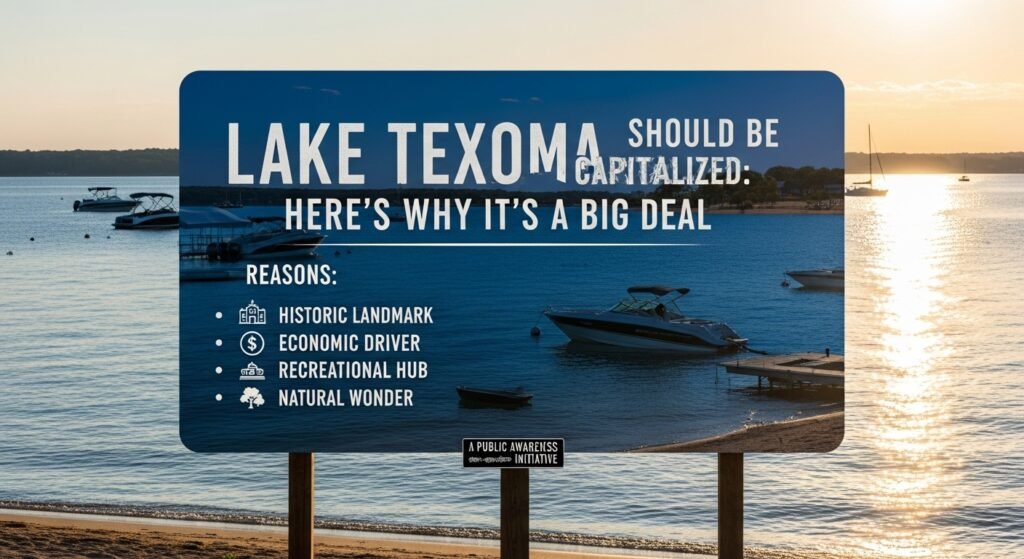
Geographically, Lake Texoma is more than just a pretty spot. It plays a key role in flood control, hydroelectric power, and water supply for surrounding areas. Built by the U.S. Army Corps of Engineers, the lake also connects to the Red River and Washita River. Knowing this makes the name even more special. It’s not just a vacation lake—it’s part of a much bigger system that benefits thousands of people. This importance is another reason why Lake Texoma should be capitalized—we’re talking about a key natural and man-made landmark.
How to Use Lake Texoma in Sentences
Knowing grammar rules is one thing. Using them is another. Here are some quick examples of how to correctly include Lake Texoma in your writing:
- ✔️ We rented a cabin on Lake Texoma for the summer.
- ✔️ My uncle caught a striped bass in Lake Texoma.
- ✔️ There are several campgrounds near Lake Texoma.
- ❌ I’m driving to lake texoma this weekend.
You get the idea. It’s easy to make your sentence look polished just by capitalizing the name properly—because yes, Lake Texoma should be capitalized every single time.
Fun Facts to Share About Lake Texoma
Let’s take a break from grammar and learn some fun facts about Lake Texoma that’ll impress your friends:
- It’s home to striped bass, a fish that’s rare in most lakes.
- The lake was created in 1944 after Denison Dam was built.
- Lake Texoma receives more than 6 million visitors per year.
- The lake is part of both the state of Texas and the state of Oklahoma.
- Local towns nearby call themselves part of the Texoma region.
With so much popularity and history tied to this lake, it’s clear that Lake Texoma should be capitalized when you’re writing about it!
Local Culture and the Texoma Community
The area around Lake Texoma is packed with friendly locals, small businesses, lakeside stores, and cozy cabins. Places like Pottsboro, Denison, Kingston, and Durant all consider Lake Texoma part of their hometown charm. The lake supports local jobs, brings in tourism, and offers peaceful spots for families to enjoy nature. Because of its emotional and financial value to the community, Lake Texoma should be capitalized, not just grammatically—but symbolically too. It represents more than land and water—it’s community, culture, and connection.
Do You Capitalize “Lake” in All Cases?
Here’s a quick tip: if the word “lake” is part of a general term, you don’t capitalize it. But when it’s part of a specific name, like Lake Texoma, you should. Here’s how it works:
- ❌ I’m going to the lake to relax. (Just a general lake)
- ✅ We’re heading to Lake Texoma for boating. (A real place)
The secret is knowing whether you’re naming a particular lake or just talking about lakes in general. When it comes to Lake Texoma, it’s always a proper noun. So yes, Lake Texoma should be capitalized.
How Schools Can Teach Name Capitalization Better
Teachers can use examples like Lake Texoma to make grammar fun and practical. Instead of just listing rules, schools could show maps, use real place names, and have students practice writing about travel, news, or nature. This way, kids learn both geography and grammar at the same time. When students understand that Lake Texoma should be capitalized because it is a real, famous place, they’re more likely to remember why capitalization matters.
FAQs
1. Should Lake Texoma be capitalized in every sentence?
Yes, because it’s a proper noun. Always use capital letters for proper place names.
2. Is the word “Lake” always capitalized?
Only when it’s part of the official name—like Lake Texoma. Otherwise, you don’t need to capitalize it.
3. Why do people sometimes write lake texoma in lowercase?
Probably by mistake! It’s common in casual writing, but it’s still incorrect.
4. Does spelling Lake Texoma correctly make a difference?
Yes. It shows that you respect grammar rules and the importance of named places.
5. Can “Texoma” stand alone?
Sometimes. People use “Texoma” to refer to the region, but it should still be capitalized.
6. Is it bad grammar to write lake texoma without capitals?
Yes, it’s wrong in formal writing. Always capitalize names of specific places.
Final Thoughts
It might seem like a small thing, but writing Lake Texoma with the correct capitalization shows attention to detail, respect for place names, and a good understanding of English grammar. Whether you’re writing an essay, posting on social media, or creating travel content, knowing that Lake Texoma should be capitalized helps your message look smart and polished. More than that, when we write respected names the right way, we help keep language clear and meaningful. So next time you type about your lakeside adventure, do it with care—and a capital L and T. Because yes, Lake Texoma should be capitalized, and now you can confidently explain why.