
As the digital landscape rapidly expands, the complexity and frequency of cyber threats rise in tandem, making robust cybersecurity a non-negotiable priority for both organizations and individuals. At the heart of this defense strategy, modern firewalls stand as essential guardians—no longer just passive barriers, but proactive systems capable of adapting to increasingly sophisticated attacks. As firewalls evolve, they now incorporate advanced functions designed to tackle challenges unique to cloud computing, encrypted traffic, and identity-driven threats. Organizations needing scalable, advanced protection can explore solutions like the Versa Networks firewall solution, which exemplifies innovation in this dynamic field.
The journey from simple packet inspection to intelligent, adaptive network defense highlights the transformation of firewalls into linchpins of digital security. Today, businesses can’t rely solely on traditional protection. Instead, adaptive, intelligent platforms pave the way for comprehensive risk mitigation. To stay ahead in the cyber arms race, understanding how modern firewalls counter today’s threats is paramount for any enterprise’s security road map.
Evolution of Firewalls
The earliest firewalls operated as straightforward packet filters, checking network traffic against preset rules to allow or block transmission. Their simplicity made them useful for early internet needs, but they were insufficient for the multifaceted threats emerging with technological progress. The introduction of stateful inspection firewalls marked a turning point, enabling deeper inspection and tracking of session states. This progression ultimately gave rise to Next-Generation Firewalls (NGFWs). NGFWs blend deep packet inspection, context-aware filtering, and integrated threat intelligence to offer granular control over both applications and users. This evolution highlights an industry-wide shift from perimeter-only defenses to context-aware, dynamic security postures.
Limitations of Traditional Firewalls
While traditional firewalls set the foundation for network defense, their structural limitations have become apparent in recent years:
- Inadequate Cloud Visibility: Organizations increasingly leverage cloud services, but older firewalls lack visibility and governance over these off-premises assets, leaving critical data exposed.
- Encrypted Traffic Challenges: As encryption becomes ubiquitous, many legacy firewalls struggle to inspect or decrypt traffic without impacting performance, creating hazardous blind spots that cybercriminals exploit.
- Static Rule Sets: Relying on fixed rules, these firewalls cannot adapt quickly to zero-day attacks or new evasion techniques, resulting in defense gaps as threat actors innovate.
Features of Next-Generation Firewalls
NGFWs overcome these legacy obstacles by integrating advanced technologies:
- Application Awareness: NGFWs recognize and control traffic based on applications rather than solely on ports or protocols, tightly policing what software communicates over the network.
- Integrated Intrusion Prevention: Real-time intrusion prevention systems (IPS) allow these firewalls to proactively identify and halt sophisticated cyberattacks before they can breach defenses.
- Advanced Threat Intelligence: Leveraging global databases, NGFWs utilize the latest threat feeds to block emerging malware, ransomware, and exploit kits automatically.
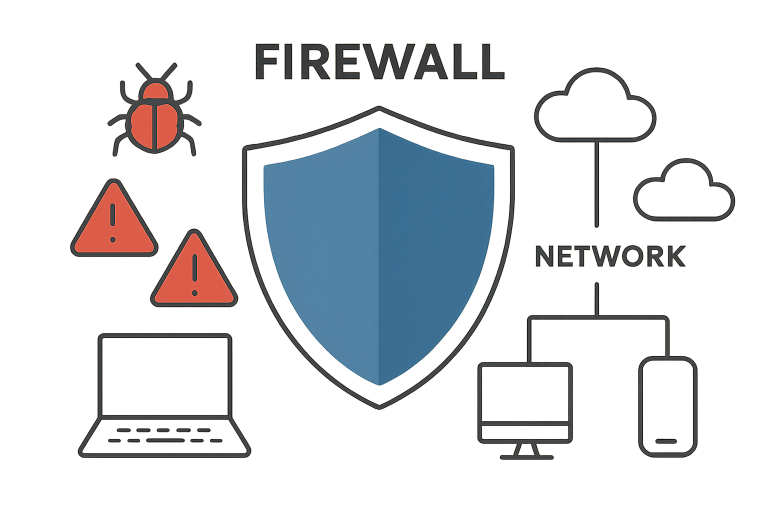
The rise of remote work and distributed systems has amplified the value of these features, as firewalls now protect far more than a physical office—extending secure access to users and endpoints worldwide.
AI Integration in Firewall Technology
Artificial Intelligence (AI) is revolutionizing how modern firewalls detect, analyze, and respond to threats. AI-enabled firewalls can process vast amounts of network telemetry in real time, spotting subtle behavioral anomalies that manual inspection would miss. Automation powered by machine learning enables these systems to block suspicious activity as soon as malicious indicators emerge, minimizing response time and reducing human workload. As attackers wield automation, AI’s predictive capabilities are indispensable for providing next-level protection against sophisticated and previously unknown exploits.
Identity-Driven Security Measures
The surge in remote work and Bring Your Own Device (BYOD) policies has introduced new risks related to user authentication and authorization. Modern firewalls are evolving beyond IP-based filtering by integrating with identity management frameworks. This enables adaptive rules tailored to individual user roles, behaviors, and contextual risk, drastically reducing internal threat exposure and the likelihood of unauthorized access. Such measures are increasingly critical as cyber attackers shift their focus toward exploiting credential theft and lateral movement within networks.
Importance of Adaptive Security
Adaptive security is a defining characteristic of forward-thinking, resilient networks. Rather than remaining static, adaptive firewalls adjust access controls, filter settings, and response protocols in lockstep with the current threat environment. Powered by analytics and real-time reporting, these dynamic systems maintain a strong defense perimeter even as adversaries modify their methods. Adaptive security delivers peace of mind to organizations by ensuring that their protections grow stronger and smarter with every encounter, keeping them one step ahead of cybercriminals.
Best Practices for Implementing Modern Firewalls
- Regularly Update Firewall Rules: Continuously refresh firewall policies to reflect new intelligence and to accommodate evolving business needs.
- Implement Comprehensive Logging and Monitoring: Deeper visibility through robust logging helps organizations quickly identify anomalous actions and respond before damage occurs.
- Conduct Periodic Security Audits: Regular reviews and assessments of firewall settings uncover hidden vulnerabilities and optimize resilience.
- Integrate with Other Security Solutions: Combine firewall solutions with endpoint detection, security incident management, and zero trust architectures for maximum defensive coverage.
Conclusion
Modern firewalls are foundational to contemporary cybersecurity, evolving beyond their original role to become flexible, intelligent defenders of our digital assets. Equipped with AI-driven analytics, adaptive capabilities, and identity-centric controls, they address the latest cyber risks facing businesses of all sizes. As threats evolve, so too must our defenses—and implementing next-generation firewalls ensures a smart, robust, and resilient shield against tomorrow’s adversaries.