
Key Takeaways
- Broken links can significantly harm your website’s SEO performance.
- They negatively impact user experience, leading to higher bounce rates.
- Regular audits and maintenance are crucial for identifying and resolving broken links.
Introduction
Broken links do much more than create nuisance errors for website owners—they can subtly and steadily undermine your search engine optimization efforts and erode the overall trust users have in your site. When a visitor clicks a link expecting valuable content, only to be met with a 404 error, it represents both a lost opportunity and signals to search engines that your site’s maintenance may have lapsed. Addressing these issues head-on by understanding their consequences and workflows for quick resolution is essential for sustainable online growth. For those seeking professional help in reclaiming lost SEO value, exploring the Vazoola broken link building service offers an actionable solution.
Maintaining a website’s internal and external link architecture has a direct impact on both user experience and SEO. Search engines like Google continuously evaluate a site’s structure and content quality, factoring broken links into their ranking algorithms. This makes routine link checks a foundational part of digital management for both new and established sites.
Understanding Broken Links
Broken links, often referred to as dead links, are simply hyperlinks that do not successfully direct a user to the intended page. Instead, they return error messages such as “404 Not Found.” Several typical scenarios produce dead links:
- Content is deleted or moved, and no redirect is set up for the previous URL.
- Typos or mistakes in the URL, either in the underlying code or the destination address.
- External sources are updating or removing their original content, causing outbound links to fail.
Link rot—the gradual decay of web links over time—can affect even high-quality, frequently updated sites. As the web evolves, content is constantly moved, reorganized, or removed, meaning both internal and outbound links may inadvertently become broken without regular review.
Research from Search Engine Land highlights how sites with a high percentage of broken links are perceived as poorly maintained by both users and search algorithms, directly impacting their reputation and ranking potential.
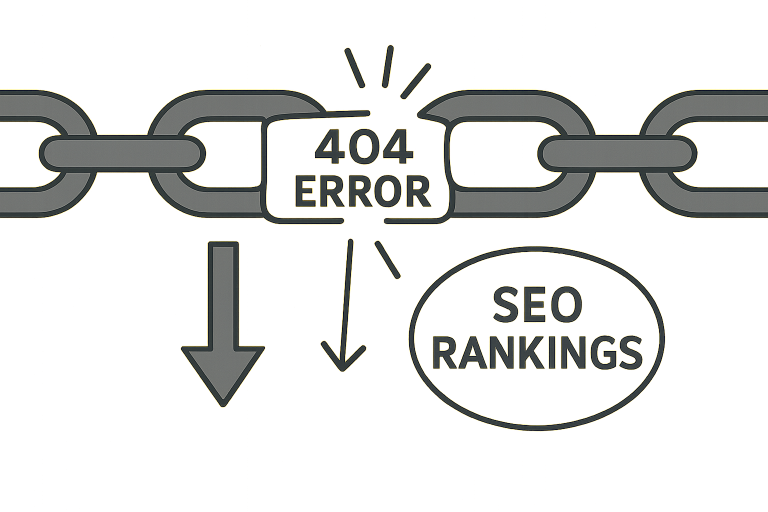
SEO Impact of Broken Links
The ramifications of broken links on SEO go far beyond the occasional error message. They present several challenges for site owners seeking to climb search engine rankings:
- Crawlability Issues: Search engine bots rely on seamless navigation to index new pages. Frequent 404 errors or dead ends prevent bots from wholly indexing your site, resulting in reduced visibility.
- Loss of Link Equity: When valuable backlinks from other reputable sites become defunct or link to nonexistent pages, your site loses authority in the eyes of search engines. Link equity, also known as “link juice,” dissipates when it hits a broken link rather than being distributed to active, relevant pages.
- Negative User Signals: Higher bounce rates and lower dwell times indicate to search engines that the site isn’t meeting visitor expectations, which can contribute to a decrease in rankings over time.
Google states in its Search Central documentation that maintaining working links throughout your website helps bots access all your site’s content more efficiently, strengthening its performance in organic search.
User Experience and Bounce Rates
Nothing frustrates users more than landing on an error page when they expect applicable content. This friction directly impacts how long visitors choose to stay on your website. According to recent studies, sites plagued by broken links experience a rise in bounce rates of up to 38% compared to well-maintained sites. These poor engagement metrics are a red flag, prompting search algorithms to lower the ranking of affected pages, which further reduces organic reach.
Indirect Impact on Brand Reputation
Beyond just SEO, regularly encountering non-functional links can lead to a negative perception of your brand. Users may begin to associate your business with neglect, which can reduce the chances of return visits and referral traffic from word-of-mouth or social sharing.
Tools to Detect Broken Links
To keep your website healthy, consistent identification and resolution of broken links is key. Fortunately, several reliable tools simplify this process:
- Google Search Console: Reports on crawl errors and highlights both internal and external broken links detected during recent crawls.
- W3C Link Checker: A Comprehensive online tool to scan individual pages or entire websites for failed links.
- Check My Links: A browser extension, ideal for quickly scanning webpages and flagging broken and redirecting URLs for immediate correction.
These tools can be part of a regular site review routine, helping you proactively address link issues before they affect users and SEO.
Best Practices for Fixing Broken Links
- Schedule Regular Audits: Integrate monthly or quarterly link checks into your website maintenance plan to identify and resolve broken links promptly.
- Use 301 Redirects: When content is moved or removed, a 301 redirect helps preserve any accumulated link equity and directs both users and bots to the updated location.
- Update Internal Links: Ensure that all internal references in your navigation and content link to functional, relevant pages.
- Monitor External Links: Periodically review outbound references, especially to smaller sites that may change URLs more frequently without notice.
Leveraging Broken Link Building
Broken link building isn’t just about cleaning up your own site; it’s also an opportunity to build quality backlinks. By identifying dead links on related sites and suggesting your relevant content as a replacement, you can enhance your site’s authority and attract valuable referral traffic—a key strategy employed in modern link-building campaigns.
Conclusion
Broken links are an often-overlooked aspect of website optimization, but their impact on both SEO and user experience can be profound. Through diligent audits, strategic redirects, and mindful maintenance, you can maintain your website’s health, maximize ranking potential, and support a consistently positive experience for every visitor.